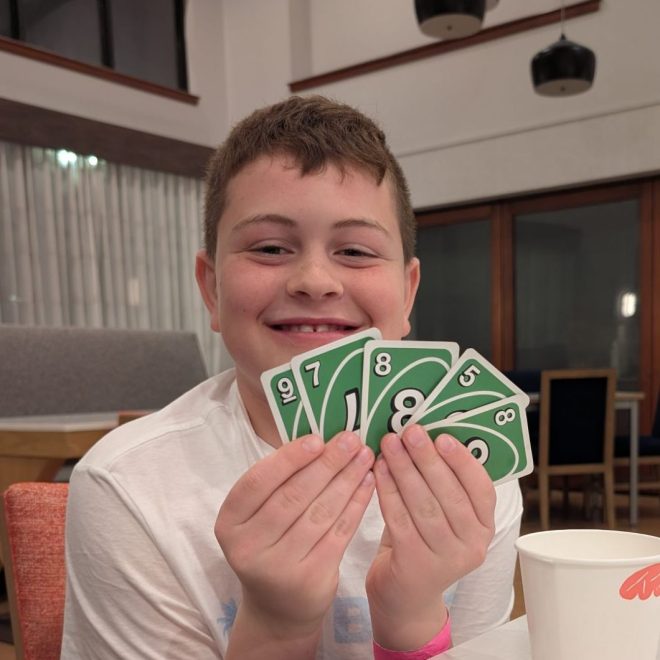
“Dad, you’re not listening.”
Oof. That one stings.
I don’t know about you, but there are few things more humbling than having one of my kids call me out for not actually hearing them. And let’s be honest—it’s not because I don’t care. It’s because sometimes my brain is juggling all the things at once: work, schedules, bills, whether or not I started the dishwasher, did I make the right substitutions on my fantasy football team… and suddenly, I realize I just nodded along to an entire monologue about Fortnite without actually absorbing a word.
It’s not about Fortnite or whatever game or activity they may be telling us about. If our kids care enough to tell us about something now, then we must care enough to actively listen. Because if we brush off the things that seem little now, they may not think we care enough about the big things later.
Communication is more than just talking—it’s about connecting. And as dads, the way we communicate with our kids shapes how they feel about themselves, about us, and about the world around them.
Turns out, kids already get something that a lot of adults still struggle to understand—communication isn’t just about the words we say. It’s about how we say them, how we listen, and whether we’re fully engaged in the conversation.
Why Communication Matters
Think about the relationships in your life—your parents, your spouse, your friends. What made you feel connected? Was it the words they spoke? Or was it how they made you feel seen, heard, and valued?
Now flip it—what do you want your kids to remember about talking to you? Do you want them to think, “Dad always made time for me,” or do you want them to say, “Dad was always too busy to listen” or “Dad was more interested in whatever what was on his phone”?
That’s a sobering thought for me.
The way we communicate with our kids now is shaping the kind of relationship we’ll have with them in the future. And if we want them to talk to us when they’re teenagers, we need to start showing them now that we’re listening.
The Hardest Part: Actually Listening
Confession: Sometimes, I listen just enough to respond, but not enough to really hear. And kids can tell the difference.
One of the best lessons I’ve learned as a dad is the power of pausing—literally stopping what I’m doing, making eye contact, and giving my full attention. When I do that, I see something incredible happen: my kids open up more.
Not because I solved their problem. Not because I gave a perfect dad-speech. But because I showed them they matter. I need to do that more.
Three Ways to Improve Communication with Your Kids
- Be Where Your Feet Are
We tell our kids to “look at me when I’m talking,” but do we do the same? Put the phone down. Turn away from the screen. Give them your full attention—even if it’s just for a couple of minutes. - Ask More Questions
Instead of giving quick-fix advice, ask questions that invite them to share more. “How did that make you feel?” or “What do you think you’ll do next?” gives them space to process out loud.
*Side note: This is something adapted from one of my favorite books, 7 Habits of Highly Effective People by Stephen Covey.
“Seek first to understand, then to be understood.”
Practicing this one habit in our relationships and communication would solve a lot of problems for all of us.
- Model Healthy Communication
The way you talk to your spouse, your coworkers, and even the stranger at the drive-thru is shaping how your kids will communicate. If they see you being kind, patient, and intentional, they’ll learn to do the same.
The Fun Side of Communication
Not all communication is serious! Sometimes, the best moments happen in the silly little conversations—like misheard lyrics in the car or inside jokes that make no sense to anyone but your family.
One of our favorite things to do is make up ridiculous would-you-rather questions just to see where the kids’ minds go.
- Would you rather sweat mayonnaise or have your entire body covered in hair?
It’s gross, it’s goofy, but it gets them talking. And sometimes, that’s all it takes to open the door for bigger conversations down the road.
Final Thoughts
At the end of the day, communication is about more than just words—it’s about making our kids feel heard, valued, and understood.
So, go ahead—put the phone down, ask a silly question, or just listen without rushing to respond. Because long after our kids forget the specific words we said, they’ll remember if and how we made them feel seen and heard.
 DADDYLESSONS