One of the most common phrases I hear from my kids sounds something like this:
“That’s not fair.”
Sometimes they’re right. Sometimes they’re not. And sometimes what they’re really saying is, “That’s not what I wanted.”
If I’m being honest, I don’t think this is just a kid problem. Adults do it too. We compare. We complain. We focus on what’s missing. We scroll through social media and convince ourselves that everyone else’s life is somehow better than ours. And before long, we lose sight of everything we’ve already been given.
That’s why gratitude is so important. Not just for our kids, but for us too.
Gratitude Changes What We Notice
I’ve noticed something about gratitude: the things I’m most grateful for are often the things I take for granted.
My health. My family. A roof over my head. A job that provides for us. Friends who show up when life gets hard.
Rarely do I wake up thinking about those things. Instead, my attention naturally drifts toward whatever isn’t going the way I want. The project that fell behind. The unexpected expense. The inconvenience. The frustration.
It’s amazing how quickly we can overlook a thousand blessings because of one annoyance.
That’s why gratitude matters. Not because it changes our circumstances, but because it reminds us of what was already there all along. The older I get, the more I realize that gratitude isn’t about getting more. It’s about recognizing how much you’ve already been given.
The New England Lesson
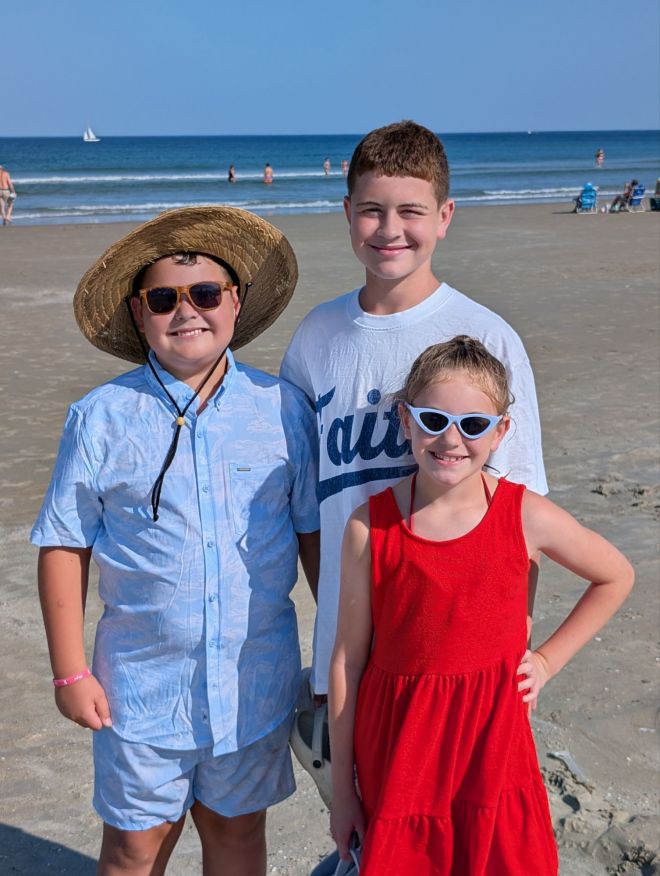
We recently completed a family trip through New England as part of our somewhat crazy goal to visit all 50 states before Noah graduates high school.
Like every family vacation, it wasn’t perfect. There were long drives, unexpected detours, tired kids, changing plans, and a few moments where everyone probably just needed a snack.
But there were also incredible memories that remind you how quickly life moves.
At one point during the trip, I felt incredibly grateful for all the clam chowder I was eating! But more importantly, I found myself looking around and realizing that these family vacations won’t always look like this. Someday the kids will be grown. Someday they won’t all be piled into the same vehicle with us. Someday they’ll be building adventures with families of their own. And while I won’t miss every inconvenience, I have a feeling I’ll miss these moments.
Gratitude has a way of helping us appreciate something while we’re still experiencing it instead of only appreciating it after it’s gone.
That’s a lesson I’m still learning.
Gratitude Doesn’t Require Perfect Circumstances
One of the biggest misconceptions about gratitude is that it’s only available when life is going well. But some of the most grateful people I’ve ever met have walked through incredibly difficult circumstances.
Gratitude isn’t pretending everything is perfect. It’s recognizing that even when life is hard, there is still something worth appreciating. A lesson. A friend. A sunset. A meal. A prayer. A moment with your family.
Sometimes gratitude isn’t about having more. It’s about noticing what’s already there.
Three Ways to Teach Gratitude
1. Model It
This is where it starts. Our kids hear how we talk. They notice whether we constantly complain and focus on what’s wrong, or whether we regularly express appreciation for what’s right.
Kids learn gratitude long before they learn how to define it. If we want grateful kids, they probably need to see grateful parents.
2. Say It Out Loud
One simple practice we’ve tried to incorporate is asking, “What was the best part of your day?”
Not because every day is great, but because even on difficult days there is usually something good worth noticing. Helping our kids identify those moments trains them to look for them.
Part of developing gratitude is noticing the good things that would otherwise pass by without much thought.
3. Connect Gratitude to People
One of the best ways to develop gratitude is to recognize the people behind the blessings we enjoy.
Someone grew the food we’re eating. Someone taught the lesson. Someone coached the team. Someone sacrificed time or money so we could have an opportunity. Someone showed up when they didn’t have to.
Very few of the good things in our lives happen entirely because of us.
Gratitude grows when we begin recognizing how many people contribute to our lives—and then actually take the time to thank them.
Gratitude and Faith
Scripture repeatedly calls us to give thanks. Not because God needs our gratitude, but because we need it.
Gratitude shifts our focus from what we lack to what God has already provided. It reminds us that every good thing is ultimately a gift. And perhaps most importantly, it keeps our hearts soft.
It’s hard to be grateful and entitled at the same time.
That’s something I want my kids to understand. Faith isn’t only trusting God for the next thing we want Him to do. It’s also learning to recognize and give thanks for what He’s already done.
Final Thoughts
At the end of the day, gratitude isn’t a personality trait. It’s a choice, a habit, and a perspective. And like most things worth developing, it gets stronger with practice.
The world will give our kids plenty of reasons to be dissatisfied. There will always be someone with more money, a nicer house, a better vacation, more playing time, newer shoes, or whatever the next thing happens to be.
I want to help mine learn something different. I want them to recognize blessings when they see them, appreciate the people who contribute to their lives, and enjoy moments instead of constantly rushing toward whatever comes next. I want them to understand that a grateful heart is one of the greatest gifts they can carry into adulthood.
Because eventually, they’ll leave home. When they do, I hope they carry more than just memories. I hope they carry gratitude.


You could be a professional writer !
LikeLike